Universalis, About this blog

Tuesday, January 22, 2013

If someone asks: What is the meaning of the decrees and laws and customs

".. that the Lord our God has laid down for you?" According to Moses (Deut 6:4-25), "Once we were Pharoah's slaves in Egypt, and the Lord brought us out of Egypt by his mighty hand. Before our eyes the Lord worked great and terrible signs and wonders against Egypt.. And he brought us out .. to lead us into the land he swore to our fathers he would give to us. And the Lord commanded us to observe all these laws and to fear the Lord our God, so as to be happy for ever and to live, as he has granted us to do until now. For us, right living will mean this: to keep and observe all these commandments before the Lord our God as he has directed us.

Does this still hold true to Christians today? Yes, of course it does, for it is still God's will that his people -- his children! -- be happy for ever -- and to live! "The glory of God is man fully alive!" So wrote St. Irenaeus. Fully alive with the Holy Spirit in Jesus Christ.

Jesus did not come to abolish the law but to fulfill it. And he has, and so the decrees and laws and customs continue today, but in light of the New Covenant in Jesus, everything is made new, made greater. The two greatest commandments sum up the Law and the Prophets. The sacraments are holy customs to keep, not as mere customs anymore but as signs that actually convey grace, too. And we have the Church, a family structure that is also a kingdom, a royal priesthood, where everyone is already priest, prophet and king, but still on the way to perfection. With the authority of Christ, through his apostles and their successor bishops, Church dogma and laws are still ordered towards the same end: so that we may be happy for ever and live. And so we believe as the Nicene creed sums up. We worship in the celebration of the Eucharist. We are edified in prayer and by Scripture and Tradition. We begin, are nourished and healed along our journey, and end our race by God's grace in the sacraments. We live in harmony and order with our fellows through the decrees of the Church. We glorify God in all ways through the rich diversity of customs, art and all expressions of our faith in Him.

What of this warning by Moses: "Do not follow other gods, gods of the peoples round you, for the Lord your God who dwells among you (!) is a jealous God; his anger could blaze out against you and wipe you from the face of the earth. Do not put the Lord your God to the test as you tested him at Massah." In light of the New Covenant, we know that God's displeasure need not blaze out as it did in the Old Testament. It is terrible enough when we cut ourselves off from him (not the other way around), and so reject his love and his grace, and thus sever our union with him. Jesus is, for us, the mercy of God, the love and compassion of God, the reconciliation with the Father, expressed today not with sacrifices at the temple but through his sacrament of Reconciliation. So there is no excuse even for those who have fallen away: "a humbled, contrite heart you will not spurn" indeed because God is love and mercy.

Truly, The Law of the Lord is perfect: it revives the soul. The rule of the Lord is to be trusted, it gives wisdom to the simple. The command of the Lord is clear, it gives light to the eyes. He who loves his neighbor has satisfied every claim of the l aw: the whole law is summed up in love." (From the responsory in today's Office of Readings.)

Monday, January 21, 2013

One Body: the scandal of Christian disunity today

Pope Benedict calls on commitment from all Christians towards unity, which is what God wills for the Church. We can't leave it as something nice to have or something that God will sort out himself. If a Christian is one who is constantly (as much as possible) in union with God through Christ, then this oneness must be consistent all through his/her life, too. This includes our prayers, our actions, what we teach and how we live. Let us all pray thus that we may be one, just as the Father is one with the Son, in every little way available to us.

Sunday, January 13, 2013

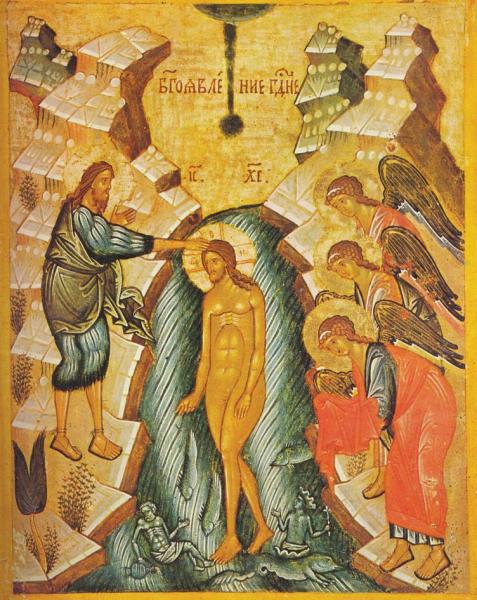
The Baptism of Jesus at the Jordan: a declaration of love, and a work permit

Today's homily at our parish, by our former parish priest from a few years ago, was electrifying. First, God declares to all the world that this is his beloved son, with whom his favor rests. The same declaration should ring in our hearts, so to speak, when we remember that we, too, were baptized, and likewise with such love declared, for we become adopted in Christ. Second, as with this beginning of Jesus' public ministry, we too are commissioned to public ministry: "citizens of the world" as Father Paddy put it, not that we are of the world, but here we are in the world, sons and daughters of God the Most High. As St. Paul writes to Titus, we are God's own people with no ambition other than to do good. As I reflected on this today at Mass, it came to my mind as it has before while singing a hymn: I am not called to sing loud, nor to sing like a pro. I am called to sing, along with everyone else. I am called to do good, and I know I am gifted by God to do good: nothing earth-shaking -- just in the mundane, in my ordinary life, with extraordinary grace (from God).

May you who read this be graced with such an awareness of your own baptism: you are God's child in Christ, beloved, with whom his favor rests.

Thursday, January 03, 2013

Have you ever been served up these argument fallacies before?

Monsignor Charles Pope reviews common fallacies that you might encounter again in the future. And adults use them a lot, too. In the defense of truth in disputations, we should all know better.

Sunday, December 30, 2012

The Holy Family

Today is the feast of the Holy Family, and yes, that's what I want my family to be: holy. Not sanctimonious, not stuffy and ceremonial: just plain old holy. No, not perfect -- none of that this side of heaven. No, not impeccable -- we do wrong aplenty here, and will continue to do so. It is a surprising comfort that the Father both knows this to be our lot on earth and provides his grace, especially in the sacraments, to deal with those lapses.

So what makes a family holy if it isn't perfect after all? I think that, at least for the families still on earth, we just have to live consecrated lives, set apart for God our Father. It's a matter of will and action. When we fall, which we will from time to time, we get back up, acknowledge our sins (big and small), reconcile with the Father with the sacrament, and push on again. There will be times when we don't understand what's going on, when we don't understand other members of our family, when we don't feel like it, but we push on. And his grace will always be enough!

May the Holy Family - Jesus, Mary and Joseph - be our inspiration, and may they smile upon our holy families today.

Wednesday, December 26, 2012

Open the door for Christmas

A thought occurred to me while reading this part of Pope Benedict's Christmas message:
“If we believe”. Here we see the power of faith! God has done everything; he has done the impossible: he was made flesh. His all-powerful love has accomplished something which surpasses all human understanding: the Infinite has become a child, has entered the human family. And yet, this same God cannot enter my heart unless I open the door to him. Porta fidei! The door of faith! We could be frightened by this, our inverse omnipotence. This human ability to be closed to God can make us fearful. But see the reality which chases away this gloomy thought, the hope that conquers fear: truth has sprung up! God is born! “The earth has yielded its fruits” (Ps 67:7). Yes, there is a good earth, a healthy earth, an earth freed of all selfishness and all lack of openness. In this world there is a good soil which God has prepared, that he might come to dwell among us. A dwelling place for his presence in the world. This good earth exists, and today too, in 2012, from this earth truth has sprung up! Consequently, there is hope in the world, a hope in which we can trust, even at the most difficult times and in the most difficult situations. Truth has sprung up, bringing kindness, justice and peace.

What do we risk in turning our backs on faith? We need not imagine: look at how Christianity has influenced civilizations across the centuries. Yes, there is both good and bad, but ascribing the bad to the good, which does not make sense, will justify throwing out everything. In chopping at the root of the largely good tree that is Christian society, one will destroy the whole tree. Gardeners know enough to prune and treat spots of rot and disease, rather than chop off the root altogether. And here is the root of what we largely enjoy today: Jesus Christ, whose birth we celebrate at Christmas, who is present in the world through his Church, and whose reign persists in every Christian who practices justice in his name -- through the door of faith.

Tuesday, December 25, 2012

Today is born our Savior, Christ the Lord!

Byzantine/Romanian Icon of the Nativity
From the psalm in last night's vigil:
Happy the people who acclaim such a king,
who walk, O Lord, in the light of your face,
who find their joy every day in your name,
who make your justice the source of their bliss...
‘He will say to me: “You are my father,
my God, the rock who saves me.”
I will keep my love for him always;
with him my covenant shall endure.’

And from today's psalm:
Let the heavens rejoice and earth be glad,
let the sea and all within it thunder praise,
let the land and all it bears rejoice,
all the trees of the wood shout for joy
at the presence of the Lord for he comes,
he comes to rule the earth...
With justice he will rule the world,
he will judge the peoples with his truth.

Wednesday, December 19, 2012

At times of uncertainty

.. one is left wondering about tomorrow, and that is perfectly understandable. One is likely wondering about yesterday as well, at the route that led to this predicament. One might then start making plans -- a reasonable course of action. What one cannot do is to be cynical, which makes one irrational. There is tendency to withdraw, to recoil after a major setback, and that is only to be expected except in the most mature of people. But to be cynical goes too far, defending one's pride by deciding that what is still there no longer exists. Doing so reduces the sting and the humiliation, but it also reduces visibility.

In today's reading, Zechariah gets in trouble for being rather cynical. He probably didn't think he was being cynical, but his response to the angel's message about his wife's miraculous pregnancy was 'How can I be sure of this?' It's like asking for a guarantee, a written document perhaps. But cynicism is poison to faith, I guess. Upright as he was, his faith had taken a beating over the years, perhaps. His wife, Elizabeth, fares better. In reaction to her definite pregnancy in spite of her advanced years and barren state, she keeps to herself and comes to the faithful conclusion that this was a miracle from God. She had faith and optimism enough to make such an open conclusion.

Yesterday I found myself in what should not have been an unexpected predicament. Plan A to move to a more stable employment did not work out. I thought my prospects were reasonably good, but I was wrong. Plan B for another stable employment was also taken off the table. Plan C to retain my current unstable employment was compromised: an extra job on top of my primary one is no longer available. It's a financial setback, which is significant in this family of six.

Yesterday I was withdrawn. I recoiled in mild horror. But I refuse to be cynical. I have a year's employment ahead -- in theory (it may yet be taken away in six months, I think). But even six months is a considerable amount of time. I need to move on and plan ahead. Too much is at stake. Were I to be cynical, I might turn a blind eye to opportunities that exist. It is at this point that I cannot afford an impaired vision. Time to make plans and to keep my eyes open. It's time to show that I meant it when I last prayed "Thy will be done" concerning my employment situation.

Sunday, December 16, 2012

The problem with evil ..

.. is that it doesn't vanish with the flick of a switch, just as it doesn't suddenly appear that way. It does not reside in one thing, or one place, that can be barricaded or banished from this world. It becomes real with our actions, but is conceived in our hearts. There is no banishing it any other way. Gun control legislation is no magic pill, because criminals won't care enough to obey them. And regardless of the weapon -- gun, knife, scissors, box cutter or an airplane -- evil that flares into violence will still take innocent lives.

Tuesday, December 04, 2012

Be Thankful

This morning I was growling and muttering angrily (like a lunatic) when I could not find a small item that I had dropped just as I was rushing out to catch a train. I was swearing, I banged the floor (a la Hulk), shoved several toys and pieces of furniture out of the way, to no avail. Yep, I have anger issues from time to time. I am glad I don't have the ability to use "the Force!"

As I finally sat down in the train, late and all, I acknowledged once again that I do have frustrations simmering in me, waiting for any occasion to vent. I should probably take it out on basketball or tennis instead! Given that finding time for that isn't easy, I did what I could, given where I was: I prayed. What dawned on me then, apart from the foolish and futile meltdown earlier, was, first of all, I should vent on God. He's a pretty good listener -- consider the Psalmist's vents across more than 100 Psalms, and he had some pretty awful problems!

So I started venting to God about everything I was unhappy with. It wasn't such a long list, now that I think about it, then it came to me: be thankful. Why? Because when everything is tallied up, I am blessed much more than I am wretched. Of course this is not the most novel of ideas: St. Paul probably repeats it several times in his letters. Be thankful. It puts things in perspective! And byond being thankful for one's blessings, Christians are called to be thankful as well for one's cross. How odd that seems, but again, perspective: it's part of something that goes beyond the moment, even if the problem, pain, misery, and frustration is only there as a symptom that will expose the nature of the underlying problem -- and how to solve it.

Sunday, November 25, 2012

Tuesday, November 13, 2012

How important is Christian unity?

Peretty darn important. If you aren't sure, prayerfully read John 17 and weep for the mess that the world has become and persists in because we give scandal instead of a sign. Weep likewise for families that have devolved into an association of individuals merely sharing a name or an address. Yesterday was the feast of St. Josaphat, martyr. He gave his life for his family and for unity, as our Saviour did for us and ours. What is our family worth to us?

Sunday, November 04, 2012

Throwing off the cloak -- taking on a new life

In last week's gospel reading, the blind man, Bartimaeus, dared enough to call out to Jesus who was passing by, even while being shushed by everyone Jesus calls him over, so he throws off his cloak and asks for healing from the depths of his heart. He is healed, then proceeded to follow Jesus in his way. Our new deacon made much of the analogy between throwing off the cloak and walking away from your old life. But there's more: ahead lies a radically new life in Christ, and one is not done without walking that road: forward! It is a grace to find that it is not some uncertain trek, where mystery casts dark shadows too dark to see. Much of it is revealed in light, plan in the day, as is much of his word. Who'd have known it, when the Spirit prompts, by Scripture's words, "pray constantly," it wasn't rocket science? For me, as for many over the centuries, it meant the Liturgy of he Hours. And suddenly, wonderfully, everything changes!

Wednesday, October 24, 2012

What does St. Paul think of the Church?

Quite a bit, it seems. He had previously talked about how salvation is by grace alone though faith, then in his letter to the Ephesians in Chapter 3, he reminds his reader of the grace that was entrusted to him -- a grace meant for the Ephesians. Why does God need to go through a man (and Paul considers himself the least of the saints)? Furthermore, he goes on about the mystery of salvation in Christ was kept hidden until it could be revealed though the Church. Again, why through the Church?
   My take on this is that we often take for granted what "church" is about, but we must see, from the rather Catholic perspective of St. Paul, in that chapter and elsewhere,that there is more mystery in the Church than seems obvious to any who scoff at the idea of "one, holy, catholic and apostolic Church" and prefer the term "assembly" or "congregation." God chose to reveal the mysteries of his grace through the Church on so many levels, and to dismiss the notion is to miss out on profound revelations that, apparently, are front and center.

Thursday, September 13, 2012

Losing oneself

The thing about knowing Jesus is that, apparently, when you think you know him, it turns out that you don't. Here I thought I knew what the plain scripture says about having to lose one's life for him and the gospel, then it turns out he means more. Much more. It isn't about dying for him, but for most of us, it is rather by living for him. It isn't necessarily about giving up your life in death, but in dying to yourself by turning you life over to him. In my case, by giving it over to my wife and my kids. I am terrified!

Tuesday, August 21, 2012

Enter into Eternal Life

The rich young man asks Jesus (Mt 19) "what must I do to have eternal life?" Some translations use "to receive"instead. And while that notion of obtaining salvation for oneself is truly flawed, there is another mistake here: that eternal life begins *after* this life. Not so. As in everything, Jesus fulfills and surpasses all expectaions. Eternal life begins here and now, and we should live it here and now. One enters eternal life through baptism. Every day and hour hence is an opportunity to live out that life. Eating the flesh and drinking the blood of Jesus in the Eucharist is receiving more of his life in this sacrament. This, the Church proclaims, is the source and summit of our Christian life, because Jesus, Word Incarnate, is the Eucharist.

Sunday, August 05, 2012

How do we define ouselves?

Earler I spied a registration plate that gave me pause. It began with "SXY" and then some numbers. Hence the title of this post. The question popped into my head, "why not instead define oneself with something that lasts?" For sexiness is a passing thing, as are most of our physical traits. Even certain abilities are passing: our wit, our boundless energy, our incredible memory and attention to detail. What does not pass is our love. Then I got to thinking: this is perhaps key to understanding so many things. Are all men and women created equal? Only if we measure our worth by our ability to love. You don't need a PhD to love, nor money, nor savvy, nor a glib tongue. You don't even need to be a grownup. You don't even need to be terribly emotional nor sentimental. Thankfully, love is, for the rational adult, a rational act from our free will. For the blessed children, it is simply an impulse awaiting full blossom, but even so, they can love. And if love defines us, then, properly understood, we are loveable beyond our looks, our properties, our skills and the gilded trappings that most of us cannot afford anyway.

Friday, July 06, 2012

Mercy, not sacrifice

When the Pharisees questioned the attention that Jesus actually spent with sinners (Matt 9:9-13) and tax collectors, Jesus replied that he was there as a doctor to the sick. Then he quotes Hosea 6:6, What I desire is mercy, not sacrifice. I did not understand this for years, until I actually took a look at it in context. The NRSV translates it as steadfast love rather than mercy, but the full verse opened my eyes: For I desire steadfast love and not sacrifice, the knowledge of God, rather than burnt offerings.


The contrast is instructive. Matthew was called to follow, and he did. And so did many avowed sinners who heard the call down through the ages. The Pharisees, known for their focus on ritual purity, were clearly puzzled, and this explains why they had hung about for the most part. Their relationship with God was too much defined by their rituals, ultimately expressed in the Temple sacrifice. Turning this on its head, Christ calls us to follow him, and he'll take care of the rest. He provides the sacrifice. He reveals himself, and the knowledge of God; we don't go about discovering him. He shares this knowledge intimately beyond head knowledge through the Holy Spirit and the sacraments, especially in the Eucharist, where we know him most intimately and in a "super-substantial" way as we receive him, body and blood, soul and divinity.


To simply be perfectly honest, I am still in need of the divine doctor who alone brings healing of my soul. "O happy fault" that this should mean that he attends to me most lovingly!

Saturday, June 16, 2012

Sisters of Mercy speak the language of faith

One of the most amazing aspects of faith in God is the proper perspective that power is ascribed to God alone. Therefore, the language of faith emphasizes thanksgiving and trust in God, while we, his children, speak of charity and service pertaining to one another. With God, power is not grasped: it is granted to us as grace. As the Sisters of Mercy point out about the LCWR scandal, problems arise when the language indicates a political struggle instead. As this scandal unfolds, it is becoming a circus of politics by mainstream media, not at all a dialogue.

What now, SSPX?

Vatican confirms offer to SSPX for a personal prelature. On the plus side, unity is always a good inspiration. It is a characteristic of the Holy Spirit to bring peace, and it is as the Lord prayed fervently. On the minus side, this would be an inopportune time to be tempted to gloat -- may God's grace bring about nothing but his gifts of charity and hope!

Thursday, June 07, 2012

Which is the first of all commandments?

What immediately struck me from this question, put to Jesus by one of the scribes in today's reading (Mk 12:28-34) is that the question itself of primary importance. Assuming that God exists as the Church teaches, then it is imperative to ask what his greatest or primary command is. Then it occurred to me as well that this question may well be taken to the wrong extreme of seeking what is fundamental in order to escape the rest. But even so, Jesus does not leave much room to wriggle out of the rest: "Listen, Israel, the Lord, our God, is the one Lord, and you must love the Lord, your God, with all your heart, with all your soul, with all your mind and with all your strength. The second is this: You shall love your neighbor as yourself." The analogy of faith tells us that no component of it stands isolated from the rest of the faith, so we are compelled to recall the admonition from Jesus to observe all that he commanded the Apostles, and so we must keep the fullness of the Apostolic faith. But a postmodern believer might quickly complain that to speak of commandments is old-fashioned and too forbidding to consider. Here also, the analogy of faith comes to our aid, for Jesus equated this obedience to his commandments with love for him. We may well wince at the notion of receiving commands, but here we have someone who is more than worthy to give them: no earthly ruler who is, at his core, no better than we. This Lord is fully God, and has the right to issue commands, not because of his terrible power -- which is indeed terrible and to be feared -- but because of his awesome love, because he is love. Therefore, to circle back to that question, the first of all commandments is to love -- to love him who loved us first.

Saturday, April 21, 2012

This short reading from today's Gospel, from Jn 6:16-21, baffled me at first:
In the evening the disciples went down to the shore of the lake and got into a boat to make for Capernaum on the other side of the lake. It was getting dark by now and Jesus had still not rejoined them. The wind was strong, and the sea was getting rough. They had rowed three or four miles when they saw Jesus walking on the lake and coming towards the boat. This frightened them, but he said, ‘It is I. Do not be afraid.’ They were for taking him into the boat, but in no time it reached the shore at the place they were making for.
But I learned something from meditating upon it for a while. Like the disciples then, I get anxious about where I think I should be and when. Perhaps with some amusement, Christ demonstrates that he is never late for appointments!

Wednesday, April 11, 2012

He does not call from afar

Two of the disciples of Jesus were on their way to a village called Emmaus, .. Jesus himself came up and walked by their side; but something prevented them from recognising him. He said to them, ‘What matters are you discussing as you walk along?’ .. Then one of them, called Cleopas, answered him, .. Then he said to them, ‘You foolish men! So slow to believe the full message of the prophets! .. ’ Then, starting with Moses and going through all the prophets, he explained to them ..

Now while he was with them at table, he took the bread and said the blessing; then he broke it and handed it to them. And their eyes were opened and they recognised him; but he had vanished from their sight. Then they said to each other, ‘Did not our hearts burn within us as he talked to us on the road and explained the scriptures to us?

They set out that instant and returned to Jerusalem. There they found the Eleven assembled together with their companions, who said to them, ‘Yes, it is true. The Lord has risen and has appeared to Simon.’ Then they told their story of what had happened on the road and how they had recognised him at the breaking of bread.
Luke 24:13-35
He walks alongside us, prodding us to speak to him in prayer, to listen to him there, and in a particular way in the Bible. He goes further: he, the Word made flesh, feeds us in his very substance in the Eucharist, the sacrament where all of the Easter Triduum, from the upper room to the Cross, to the empty tomb -- is so pithily made present to us in Holy Communion.

Sunday, April 08, 2012

Called to Life

Give thanks to the Lord for he is good, for his love has no end.

Can we speak of "ends" for God? Only if we misunderstand who he is. As Fr. Robert Barron explains in episode 3 of the Catholicism series (preview here via the Seeing and Believing blog), God is not a being, as if he could be counted, he is not the highest as if he could be compared or measured. He relates St. Anselm teaching that God is whom "a greater cannot be thought." Therefore, the notion of ends do not apply! The Resurrection highlights this so profoundly to beings such as ourselves who typically view death with anxiety: life overcomes death! The Psalmist (Ps 117) sings "I shall not die" -- how could someone from that primitive age have thought this? -- and "I shall live and recount his deeds!" What an attitude to take, rejoicing so much in life in thanksgiving!

I should most certainly make that my attitude! What room is there for anxiety or gloom, if even death is swallowed up?

Tuesday, March 27, 2012

Called to be gifted

In the readings today, Isaiah tells King Ahaz what should be joyous tidings: that the Lord bids him to ask for a sign. Why does the king refuse? His words, 'I will not put the Lord to the test,' are humble enough on the face of it, but Isaiah instead conveys vexation? How should the king have responded? I guess he should have responded graciously. God is a magnanimous giver of gifts. Whether by insincerity, or by false humility, or even by pride, the king's refusal seems not to be the right answer.

In the Gospel reading from Luke, the angel Gabriel announces to Mary that she is to be the blessed mother of the Son of God, the Word of God, Christ and king. To these tidings, our Lady responds with perplexity and some anxiety, and the angel is not offended. This was, after all, a girl of fourteen years or so, and so her response was understandable, and really quite sincere. And her ultimate response caps it off: 'I am the handmaid of the Lord, let what you have said be done to me,' or, as the more romantic translations say, 'let it be done to me according to thy word.' I like this version because that word is the Word of God, himself.

This, I think, is how we should respond when faced with God's gifts. We are called to be gifted (not just called and gifted), for the Lord delights in his creation, and his love is everlasting. To his graciousness, and it is really proper and courteous -- we should say "Thank you!" and accept the gift.

Monday, February 27, 2012

Witness

In the first Sunday of Lent, Mark describes (Mk 1:12-15) some of the first activities of Jesus in very concise terms, but they brim with significance. After his baptism, Jesus went ..
  out into the wilderness and he remained there for forty days, and was tempted by Satan. He was with the wild beasts, and the angels looked after him.
  After John had been arrested, Jesus went into Galilee. There he proclaimed the Good News from God. ‘The time has come’ he said ‘and the kingdom of God is close at hand. Repent, and believe the Good News.’
Jesus had Good News to share, and when the work of John was curtailed by Herod putting him in prison, Jesus took up the task of witnessing. It follows baptism, which according to Peter (1 Pt 3:18-22) saves you now.. a pledge made to God from a good conscience, through the resurrection of Jesus Christ. Our baptized existence, one that is reborn through the death and resurrection of Jesus, is itself a witness to the Good News. But this witness needs a voice, it needs hands and feet, so that the audience may hear, see and experience it. I have a voice, I have hands and feet. Am I witnessing to others? If I am not, what am I waiting for?

Sunday, February 26, 2012

Called

One of the things that seem etched into Man's heart is a sense of calling, something that pulls beyond what is immediately obvious, that there should be something more to life than whatever there seems to be. I grew up on stories with heroes in them, from the fictional to the historical, from the Old Testament heroes like Samson and David, to brief stories of the saints like Christopher and Francis of Assisi. And the mythical Norse heroes to the Greek, Arthur and his knights, Charlemagne, Roland and the paladins. Lapu-lapu, Rizal, Bonifacio and the heroes of more than a century ago. They all had callings of significance, and I could feel it in my bones that I had mine. Probably not the same that they had, probably not as big, but just as exciting and full of adventure and surprises.

Jesus calls Levi, painting by Hendrick Terbrugghen 17th century It is probably just as well that I encountered St Josemaria Escriva at some point, and I learned the most amazing thing that makes incredible sense: the call to do ordinary things extraordinarily well -- supernaturally well, in fact. This Lent calls me to an opportunity to be returned to myself (not for me to return to myself, as I'd misstated below). To what do I return? For one, that I am called, to sanctify what is ordinary, by turning it into prayer, asking the Holy Spirit to therefore infuse the mundane activities of everyday with supernatural grace. Father and husband. Teacher, thinker, tinker. In today's readings, Isaiah proclaims God's call to holy ordinariness in acting with justice and compassion, reverence and faith (Is 58:9-14), and Jesus calls sinners to repentance, but also, as with Levi, to be his disciple (Lk 5:27-32). And this Levi is renamed Matthew, and goes from tax collector to apostle, doing ordinary things, really. Yet how many authors have had their book copied, reprinted, cited, read aloud, translated into dozens of languages, over a period of about 2000 years? Quite a boast, and it started one ordinary day at the customs house, with one extraordinary call!

Friday, February 24, 2012

Fasting

No one bats an eyelash when one hears of radical diets that shun the intake of, for example, protein, sweets, carbs, etc. We're fairly happy to admit that we don't really need those types of (usually delightful) food too much -- that there is something more important than enjoying them. But bring up the word fasting, apart from a medical context, and one instinctive reaction is, Huh? Fr. Bill today talked about a balance between feasting and fasting (catchy way of putting it). One is appreciated more if it is balanced with the other. Each is done right, done better, in the proper perspective.

Apart from keeping a balance between the two, Isaiah conveys this reminder from God: be consistent. Why do we fast? It is not to win admiration, nor to get paid for my fast. To be heard by God, a fast as prayer. Why should it ever be necessary? Well, it probably isn't, but it is consistent with a sincere and heartfelt prayer. It is a penitential prayer that is incarnated -- made flesh with the physical act of fasting. This is consistent because we are incarnate beings. To please God. Why is that important? Because apart from being Creator, he is our Father. He was delighted in our creation and is delighted when we imitate him. With sincere fasting, a heartfelt and incarnate prayer, we imitate his love when we offer him our love. He doesn't need it, but it is what we were made for, to love. As Isaiah continues to relate to us, to fast consistently, with love, means these (Is 58:1-9):

to break unjust fetters
  undo the thongs of the yoke,
to let the oppressed go free,
  and break every yoke,
to share your bread with the hungry,
  and shelter the homeless poor,
to clothe the man you see to be naked
  and not turn from your own kin?
Then will your light shine like the dawn
  and your wound be quickly healed over.
Your integrity will go before you
  and the glory of the Lord behind you.
Cry, and the Lord will answer;
  call, and he will say, ‘I am here.’

Lent: a Journey to Discovery

Two days ago, on Ash Wednesday, I began a journey. There's a Lenten calendar that I think the archdiocese put out, and it urges: Return to yourself. Words are almost invariably set within a context, so those words are certainly loaded, but they are also true. We set aside the trappings and the peripherals and go to the bare desert. As some put it, we revisit the innocence of our baptism. And I start with the ashes: reminding me that I came from dust, and to dust I shall return one day.

Is that it?

In the depths of my heart, I already know the answer: no, that is not all there is. While true, there is more to me than dust, and I did not emerge from dust on my own, nor by accident.

Then earlier today, Thursday, yet another truth is revealed: I set before you life or death, blessing or curse (Dt 30:15-20) -- choices. Life is about choices. But if I am but dust, then what is the point of making choices? Aha! I know instinctively that choices do matter, usually the difficult ones: they usually reflect a significant goal. ‘If anyone wants to be a follower of mine, let him renounce himself and take up his cross every day and follow me' (Lk 9:22-25).

Tuesday, February 21, 2012

What's up and down in Christendom today?

NewAdvent: George Weigel: Divide and Conquer
LifeSiteNews: White House claim that 98% of Catholic women use contraception a ‘damned lie’: Lutheran author
LifeNews: Every Catholic Bishop Opposes Obama Mandate, Lutherans Too
Pope Benedict XVI: Unity In The Church Is A Divine Gift Which Must Be Defended

And everything above has something to do with the longed for unity of all Christians under the one, holy, catholic and apostolic Church. Unity is strength, and divisions bring grief and scandal. The message -- the Gospel -- is being obscured, obfuscated and trampled upon.

Tuesday, February 14, 2012

Why does this generation ask for a sign?

The Pharisees .. demanded of him a sign from heaven, to test him. And with a sigh that came straight from the heart he said 'Why does this generation demand a sign? I tell you solemnly, no sign shall be given ..' And leaving them again .. he went away to the opposite shore. (Mark 8:11-13)

You can imagine how it could have happened. The arrogant demand for a sign, the eyes betraying the thought: "Nah, don't bother. I know your game. You're a fake: you can't do it." You can also imagine the frustration as Jesus fetched such a deep sigh, jumps on a boat, fleeing for the opposite shore.

How do we pray? St. James tells us in his letter:

If there is any one of you who needs wisdom, he must ask God, who gives to all freely and ungrudgingly.. But he must ask with faith, and no trace of doubt.. (James 1:1-11)

So there we have it, in the example of asking God for wisdom: ask, don't demand (and don't test), but with confidence. Why with confidence? Well, God loves you.. doesn't he? By faith, we know: yes he does. So every doubt is is not just lack in confidence: it is a lack in trust.

Monday, January 30, 2012

Who are my heroes?

It came as a bit of a shock (and quandary) when I belatedly noticed that my fictional heroes were not quite the shining heroes I thought they were. I was reading the series, The Belgariad, to my eldest (twelve) when we both realized that certain tenets of the heroes did not sit well with us. One hero is a thief, for example, while another has no trouble lauding how well the main hero, a young boy, could lie. I think it was the same hero who states at some point that a little sin was fine.
  But I continue to read the series to Justin, because I realized that such blatantly false, or imprudent ideas are best handled by clarifying them, rather than pretending that they were never uttered.
  It also elicited some reflection on my own experience, that they did not quite corrupt me to the core in spite of the unfortunate exposure -- in spite of my own inadequacies, of course. There were other exposures in my past that could have led me down diverse disasters of varying gravity. I would be a fool to think that I had steered clear of them by my own lights. :-)

Saturday, January 28, 2012

In season, out of season: work for unity

I shamelessly borrow those words of urgency to the need for Christian unity, as Pope Benedict enjoins us to take every opportunity towards it. No Christian can sit this out; the world desperately needs the powerful witness of one, holy, catholic and apostolic Church. It won't be easy, but it can't be set aside either.

Friday, January 20, 2012

That they may be one

Perhaps one of the most neglected scandals today is that which comes from the disunity of Christians:
 “How can we give a convincing witness if we are divided?”. It was in the perspective of the New Evangelization on Wednesday morning, 18 January, that the Pope introduced the Week of Prayer for Christian Unity – from Wednesday, 18 January until Wednesday, 25 January – during which prayers will be said in all the Churches for the attainment of the gift of full communion. (L’Osservatore Romano)
Please, in case you have never given it thought, pray about it. It was our Lord who said: ‘that they may be one’ (John 17 -- please read the whole chapter).

Thursday, January 12, 2012

Infertile people can't marry says Catholic Church -- false article

On the basis of the cited video from GMA news, this article is way off the mark (to put it mildly). There is nothing in the video about infertile couples, nor about mortal sin, nor about telling other religions what they can or cannot do. That report was about the recent statements of Archbishop Cruz concerning same sex marriage, and the address by Pope Benedict XVI to the diplomatic corps on Monday.
Video link: http://www.youtube.com/watch?feature=player_embedded&v=JXs7Fk8RgME

Thursday, January 05, 2012

By Love, heaven is laid open

Today's readings celebrate the marvelous love of God through Jesus Christ. In his encounter with Nathanael (Jn 1:43-51), Jesus declares,
 ‘You will see greater things than that. .. I tell you most solemnly, you will see heaven laid open and, above the Son of Man, the angels of God ascending and descending.’
Jacob's dream of a ladder to heaven with angels ascending and descending. Source: Wikipedia.The last ties in with Jacob's dream of a ladder stretching between heaven and earth, with angels ascending and descending, in which God declares:
 ‘Through you and your descendants all the nations of the earth will be blessed. See, I am with you and I will keep you safe wherever you go.’
God-with-us is Jesus himself. Giving up his life for us -- the Incarnation, passion and death and resurrection -- laid heaven open. In a word, love laid heaven open to us. By that love, we are connected to the Father through the Son, depicted by the angels ascending and descending. (I might add that this is likewise depicted by the communion of saints, with our victorious brothers and sisters in heaven working the same way the angels did, through the Son by whom we are all in communion, which death cannot destroy.)
  In the first reading (1 Jn 3:11-21), we are taught that the message we heard from the beginning is that we are to love one another. This love is life itself, for [i]f you refuse to love, you must remain dead. And we have a model to follow, for [t]his has taught us to love, that he gave up his life for us. God loved us first and laid heaven open for us. We who are in Christ should now love others in the same way, giving up our lives in ordinary but real and active ways, giving of our time and energy for others. We who are in Christ can thus make a way between our Father in heaven and those whom we love, through our love, which is God's love living in us, lived out in acts of charity.
  My son Patrick wanted to know more about miracles and I do pray that he will one day see these miracles. But more than the uncorrupted saints of a century or more, the unexplainable cures and the Eucharistic miracles, I hope that he and my other children will experience and ever rejoice in greater things .. heaven laid open at every conversion that turns a sinner into a saint.

Wednesday, January 04, 2012

Extraordinary in the Ordinary

Today's Gospel reading (Jn 1:35-42) shows how the ordinary can become an encounter with Jesus.
As John stood with two of his disciples, Jesus passed, and John stared hard at him and said, ‘Look, there is the lamb of God.’ Hearing this, the two disciples followed Jesus. Jesus turned round, saw them following and said, ‘What do you want?’ They answered, ‘Rabbi,’ – which means Teacher –’where do you live?’ ‘Come and see’ he replied; so they went and saw where he lived, and stayed with him the rest of that day.
  One of these two who became followers of Jesus after hearing what John had said was Andrew, the brother of Simon Peter. Early next morning, Andrew met his brother and said to him, ‘We have found the Messiah’ – which means the Christ – and he took Simon to Jesus. Jesus looked hard at him and said, ‘You are Simon son of John; you are to be called Cephas’ – meaning Rock.
Saints Andrew and John and the Lamb of God, Abtei Maria Laach,  by Wilhelm Rupprecht (1956). John marks this passage with a clue: John stared hard at Jesus in the first verse, then Jesus "looked hard" at Simon in the last, with the same Greek ἐμβλέψας on both. In this passage, John introduces his disciple Andrew on to Jesus, and Andrew in turn introduces his brother Simon to Jesus. Simon not only becomes a disciple of Jesus, but is given another name, Rock.
  May I also turn the most ordinary scenes of my daily life, at home or at work, into something extraordinary and sanctified!
  One of the first lessons I learned from Opus Dei, when I attended their study center back in college, was how our ordinary activities can be sanctified as we do them extraordinarily well, prayerfully -- I'm paraphrasing the various ways I'd heard or read about this idea. This, of course, comes from St. Josemaria Escriva, who was influenced, I'd read, by the writings of St. Thérèse of Lisieux. Also, just by googling, I found out that Prof. Scott Hahn, one of my favorite Christian writers, has written a book on his road to Opus Dei: Ordinary Work, Extraordinary Grace: My Spiritual Journey in Opus Dei. Those are three witnesses whose writings I can recommend, although I have not yet read any book by St. Thérèse, only a reflection on her witness by Pope Benedict XVI.
Photo source: http://05varvara.wordpress.com.

Sunday, January 01, 2012

May the Lord uncover his face to you

Awhile back I heard or read about le`hem ha panim, I think from Catholic Answers live (podcast) -- the bread of the presence, or the bread of the face. This article is good reading on this subject, which comes up in today's readings in the feast of Mary, Mother of God. In the first reading, the priestly blessing is formulated that Aaron and his sons are to use:

May the Lord bless you and keep you.
May the Lord let his face shine on you and be gracious to you.
May the Lord uncover his face to you and bring you peace.

Mary is the new ark of the covenant, a singular vessel of the real presence of God through his Son, whom we also know as the bread of life, the prince of peace. In the Incarnation of the Word made flesh through Mary, the Lord uncovered his face in Jesus who is the image of God. Truly, the Lord was gracious upon us for sending his Son. This reminds me of the exposition of the Blessed Sacrament in Eucharistic adoration. The monstrance is covered with cloth but uncovered at the exposition.
   We also get the model of prayer in Mary from today's Gospel reading: As for Mary, she treasured all these things and pondered them in her heart. It would be so like me, a man, to jump up astonished and say "Eureka! I've got it!" at some realization. True and significant as that realization might be, I think that Mary's example of contemplation is a superior approach. We men can get too excitable, but I think that contemplative prayer, unassuming and constant, daily, will go much deeper.

Holy Mary, Mother of God, pray for us!

Wednesday, December 28, 2011

Today is the feast of Holy Innocents

The Holy Innocents (from aug.edu)What would drive a king to order the slaughter of all male toddlers two years and under across a number of districts? What would drive his soldiers to carry out the deed amidst the objections and wailing of the mothers and fathers who are unable to stop the massacre? What did the bystanders do? What was going through their minds?
   And then one would ask: was God also a bystander? How could he let this happen? This is a tough one, but the answer can be as simple as this: it is his will that Herod, those soldiers, the parents of the victims and the other witnesses should have the freedom to act as they choose. They were, after all, made in his image and likeness, and so they had the power of their intellect as well as conscience, enough to know that murder was wrong. For God to deny Herod and the soldiers free will is to obliterate them as human beings. And since all human beings are capable of wrongdoing at various points in their lives, then the implications are not so limited as one might think.
    The first reading from St. John's first letter tells us that we all sin from time to time. He also tells us that in God there is no darkness. How then do we achieve communion with him if there is darkness in us each time we sin? He will not obliterate us, but he will forgive our sins. He provided the sacrifice in his mercy and love: Jesus Christ, the lamb of God. Through him, our sins can be forgiven if we acknowledge them. Even Herod could have been forgiven. As for the holy innocents, they are not abandoned to their deaths, for there is eternal life in heaven, and these innocents cannot have committed sin at that age.
    But today, a slaughter of innocent continues, as this reflection points out. What would drive fathers and mothers to abort their own child, or allow that of their grandchild, nephew, or niece? What would drive legislators to advocate for more abortions, locally and internationally, to the tune of over 40 million annually across the world? What would drive a doctor, sworn to provide healing and to do no harm, to perform the abortion despite knowing that the child is viable, or the very simple fact that even the embryo at day one is its own distinct being? What did bystanders do? What was going through their minds at what was occurring or about to occur?
    Today is the feast of Holy Innocents. Let us pray for an end to the slaughter, not by legislation, not by obliterating our free will, but primarily the conversion of our hearts, through Jesus Christ, our sacrifice and advocate.

Friday, December 23, 2011

The Naming of John the Baptist

From today's readings (Lk 1:57-66): The father asked for a writing tablet and wrote, ‘His name is John.’ .. At that instant his power of speech returned and he spoke and praised God. All their neighbours were filled with awe and the whole affair was talked about throughout the hill country of Judaea. All those who heard of it treasured it in their hearts. ‘What will this child turn out to be?’ they wondered. And indeed the hand of the Lord was with him.
Circumcision of John the Baptist, engraving by Otto Elliger (source: Pitts Theology Library)    At the naming of John, Zechariah regained his speech. What's in a name? Isn't a name just a label, just another word? In our faith that revolves around the Word who is the Son of God, words are meaningful. And this name was given by God: .. your wife Elizabeth will bear you a son, and you shall call his name John. (Lk 1:13). When anointed by God, the name perhaps bears more than just a label. I think it carries with it a sending -- a mission. For John: And he will turn many of the sons of Israel to the Lord their God, and he will go before him in the spirit and power of Eli'jah, to turn the hearts of the fathers to the children, and the disobedient to the wisdom of the just, to make ready for the Lord a people prepared. (Lk 1:16-17)
   I have a name given to me at baptism, when I was born again of water and Spirit: Christ. "Through Isaac shall your descendants be named." .. the children of the promise are reckoned as descendants. (Rom 9:7). I have a three-fold mission, too: priest, prophet and king. As prophet, I must also turn hearts to the Lord, to prepare a way for the Lord into the hearts of my family and all whom I may reach as the Lord gives opportunity.
   And you, who were baptised into Christ, that also is your name, and behind it is the Christian mission. Take it up, and like John, the hand of the Lord will be with you.
Lord, make me know your ways.
  Lord, teach me your paths.
Make me walk in your truth, and teach me:
  for you are God my saviour.

Thursday, December 22, 2011

The Magnificat and the greatness of the Lord

Today's Gospel is almost entirely the Magnificat, that canticle of the Blessed Mother that rejoices in God's grace and mercy.
  That the Blessed Mother speaks of God routing "the proud of heart" is probably key in this canticle, as such disposition seems unlikely to elicit piety, whereas this canticle precisely shows the humility of the Blessed Mother -- immediately after the praises that St Elizabeth lavishes upon "the mother of my Lord" who is "blessed among women". After the unthinkable grace of God "inclining the heavens to come down" and save us as one of our own, nothing else but humility and rejoicing is proper! As the Blessed Mother is our perfect model on the receiving end of God's salvation, our lives should be the Magnificat sung in our every act!

Wednesday, December 21, 2011

Mary's faith and Elizabeth's rejoicing

Mama Mary visits St Elizabeth, who rejoices at the honour of the visit from the mother of the Lord (graphic from wellsprings.com.au) Why was Elizabeth so filled with joy at Mary's greeting? Because the Holy Spirit filled her with joy. That passage (Lk 1:39-45) is filled with words like blessed, leapt for joy and similar words of rejoicing (a loud cry, honoured). And Elizabeth does not even have to hear the news from Mary about the Word made flesh in her womb, the unborn Son of God. Mary is blessed for her belief in the Lord's promise: trust, faith and hope in the faithfulness of God -- these are blessings of themselves, and they are gifts that keep on giving. Does the Holy Spirit prompt rejoicing in the Incarnation, or in the mother's faith? BOTH, I think. Just as man grieves over both the coming of death through sin and the fall of Eve (and Adam), we rejoice rightly over the coming of Emmanuel and the cooperation of Mary. For to minimize Mary's yes to God is to minimize Eve's (and Adam's) yes to the serpent, which would necessarily increase God's part in the fall -- and that is an impossible proposition!
  So let us believe in God's promises to us; it is all over his love letter to us, in Scripture (check out the first reading from the Song of Songs 2:8-14). Let us faithfully and joyfully say yes to our Father in heaven at every opportunity, and we will be blessed, brothers and sisters of our Lord, who can prompt faith and rejoicing to those whom we greet, too.

Sunday, December 11, 2011

Advent blogging around

The Anchoress repeats what we should already know: our relationship with God is based on constantly saying YES to his love -- to our advantage.
  Christmas need not be about stress, according to some mommy wisdom that also makes it more meaningful.
  Father Ryan Erlenbush explains how John the Baptist is and isn't Elijah. From my own reflections on today's readings, I must recommend considering how you who are baptized, while not being Elijah, are most certainly called to be a prophet.

Thursday, December 08, 2011

Immaculate Conception and something like it in all baptized Christians

Today's Gospel reading comes from that scene with Gabriel announcing the Incarnation to Mary. Why is that the reading for the feast of the Immaculate Conception. Because the Incarnation of Christ is the reason for the Immaculate Conception. In order to prepare the way for Christ, Mary must be made particularly ready to receive in her womb the Son of God. We who are baptized Christians are prepared similarly, but not in exactly the same way. My reflection on this goes thus:
  The Incarnation was a singular atomic event at the conception of Jesus in Mary's womb, and likewise, that preparation to receive the incarnated Jesus was a singular atomic event of the Immaculate Conception of Mary who was preserved from original sin at the moment of her conception in the womb of her mother, Anne. On the other hand, the conception of Jesus in us is a gradual, unfolding event. We are first born again at baptism as a new creation, but Jesus is not incarnated in us completely. Rather, as we cooperate with God's grace, our flesh is transformed gradually into Christ's body. The more we think, speak and act as the Holy Spirit moves us, the more completely Christ is incarnated in us, culminating in the resurrection of the dead.
  I sure hope this makes sense. Anyone?

Saturday, December 03, 2011

Subsidiarity in laboring for the harvest?

This article on solidarity and subsidiarity was an eye-opener for me. It explains something that I only had a rudimentary understanding of, and a fuzzy hunch about. It got me thinking about my role as father of a household, and what mistakes I have been making. While blogging is good for evangelization (assuming you did it well), as is joining in discussion forums, I was absenting myself from evangelizing my own family. Not that all bloggers do that: I'm sure the most successful Catholic bloggers out there are wiser than me in attending to home before attending to the blogosphere.
    So here I stand corrected, in prayer and spiritual reading. It does not excuse me from preaching the Good News at every opportunity that God presents me with. And so I continue to pray and to study, first to my family, and then to others. Perhaps my parish next, and then my workplace (prudently; it's a highly secularized institution and culture now). But lest I forget St. Francis who taught "Let all the brothers, however, preach by their deeds." But not by deed only, I think: "and they, going out, preached everywhere, the Lord working with them and confirming the word by the signs that accompanied it." (Mk 16:15-20). What signs? There are the obviously miraculous ones, e.g., "cast out devils .. gift of tongues; pick up snakes .. be unharmed should they drink deadly poison; lay their hands on the sick who will recover." But there are also the changed lives, turned around and over to God, incredibly filled with peace and joy previously unknown.
    If only my family would notice. :-P

Saturday, November 26, 2011

Stay awake, praying at all times

From today's readings (from Universalis):
  ‘Watch yourselves, or your hearts will be coarsened with debauchery and drunkenness and the cares of life, and that day will be sprung on you suddenly, like a trap. For it will come down on every living man on the face of the earth. Stay awake, praying at all times for the strength to survive all that is going to happen, and to stand with confidence before the Son of Man.’
It came upon me that, in this, Jesus is our ultimate model. Not only because he would frequently go off to pray alone, but because he is the Son of God, and we who are baptized are sons (and daughters) of the Most High. In prayer, I renew my sonship. A son is never alone, for he always has a father, especially in the case of ours: an eternal Father! Thus we pray constantly, being constantly sons of God the almighty! This is expressed at yet another level in the Eucharist, a very intimate prayer where I renew my sonship in an extraordinary way when I receive the body, blood, soul and divinity of Jesus Christ, the eternal Son of God, my eldest brother and the cause for my adoption as a son of God. Therefore, those who hang back from Eucharist, and from prayer, diminish their sonship at each omission -- why would anyone want that? Here is Christ's promise to those who pray at all times: strength to survive all that is going to happen, whatever the calamity, including death and the second coming, and the ability to stand with confidence before the Son of Man -- confidence, not fear of judgment!

So, what are you waiting for? Pray!

Monday, November 21, 2011

Perseverance, by the Grace of God

I'd been riding on a high since menALIVE weekend for more than two weeks now, but of course I'm not quite in a fairy tale, so I haven't yet lived happily ever after. There are still lows with the highs, but I have noticed in me a remarkably positive response to the lows. I recover faster, my perspective now being fairly upbeat and forward-facing. Then it happened: a slight meltdown in the sacristy with my two sons arguing over whether both or only one of them will serve at the altar that day. Oh the horror and the shame! Then Father Cantalamassa (not that one) walks in -- more horror and shame! I was losing my cool, and pretty soon, three boys were arguing, one being myself. Not loudly, but heated nonetheless. I was morose all the way to the consecration, flushed with shame and guilt that I not only failed to resolve it quickly and peacefully with the boys, but that I actually ended up arguing with them. But along with these thoughts came inspirations that kept me sane:

I'm really stewing because of pride, aren't I? Am I supposed to be perfect now? It happens; move on. I am replaying it over and over in my mind, and the scene is growing, not abating, and I'm not resolving anything. I really should have taken them aside to talk this out just among us -- that way, we reduce the tension.

One stunning thought surfaced, too:

This wallowing in shame and self-loathing is no longer who I am. That has already been put to death by Christ. By feeding these deadweights, I am reviving what amounts to an undead, a zombie. Now why would I want to do that?

At that point, I smiled (really!), and I prayed in earnest: thank you, Jesus! So I nailed that event to the cross where it belongs, took up my dignity (not pride), and realized that I was indeed being silly. Pride, self-loathing and defeatism were knocking, and I don't have to let them in. I think I understood something new about faith, then. It needed some mental steps, what separates conviction from taking something for granted. I believe that Christ has already won, that I was already buried and raised with him in baptism. I believe that the Holy Spirit has been poured out upon me. I am not a slave of sin any longer, and I am alive.

Time to act like it.

Whispers in the Loggia: "What, Then, Is Prayer?": For Benin's Young, Benoît the Catechist

What, Then, Is Prayer? Pope Benedict invites the young of Benin:
  What, then, is prayer? It is a cry of love directed to God our Father, with the will to imitate Jesus our brother.

Saturday, November 19, 2011

The Importance of Prayer

The readings are about prayer, I think. Not the text that goes into prayer, but what it really means: relationship:
  2558 "Great is the mystery of the faith!" The Church professes this mystery in the Apostles' Creed (Part One) and celebrates it in the sacramental liturgy (Part Two), so that the life of the faithful may be conformed to Christ in the Holy Spirit to the glory of God the Father (Part Three). This mystery, then, requires that the faithful believe in it, that they celebrate it, and that they live from it in a vital and personal relationship with the living and true God. This relationship is prayer. -- from the Catechism of the Catholic Church
In the Gospel reading, Jesus drives out traders and money changers from the Temple because it should be a house of prayer, not a den of thieves. He does this with zeal and intensity. Why was this so important? I think it is because you can't serve two masters. That temple is either truly set apart for right relationship with God or not. But that particular temple in Jerusalem is gone: our bodies are temples of the Holy Spirit now, through baptism when He was poured out upon us. We therefore face the same choice: is my body a house of prayer or a den of thieves? What do I surround my heart with? What fills my soul? If we are follow Christ, we must also drive out - with zeal! - whatever does not lead to God. Our souls must be full of prayer, in intimate relationship with God. Fill it with prayer, and you drive out sin. Five minutes, ten, fifteen minutes just being with God in prayer, quiet, contemplative, rejuvenating! And as we mature, we go from milk to meat!

Sunday, November 13, 2011

Sobering findings on today's sexualization of girls

that every parent should consider.

Of talents, profit and reward

The Gospel today is on the parable of the talents. We're probably all familiar with the fundamental message of using the talents we are given for the Kingdom, but there's a bit more that I realized just today.
When the master finds his two servants having made some profit, he declares "Well done, good and faithful servant; you have shown you can be faithful in small things, I will trust you with greater; come and join in your master’s happiness."
The reward is not retirement. It is, instead, greater responsibility.
This is additional comfort to those who keenly feel the weight of their responsibilities, apart from what is implicit in the parable itself (emphasis mine): "To one, he gave five talents, to another two, to a third one; each in proportion to his ability. What comfort? That our Father will not lay upon you a burden that you are incapable of bearing, first because He knows us more intimately than we know ourselves, and second because His grace is always sufficient, even and moreso when we feel weak.

Sunday, November 06, 2011

Men Alive

is an awesome movement in the Church today. I completed the Men Alive weekend at our parish this weekend and it has awakened, emboldened, enlightened, humbled, encouraged and revived me -- before it is too late! Praise God! One of the things I discovered was that God has been trying to tell me something for such a long time now. In fits and starts, I have been leaving the plow, neglecting and taking it all for granted. Today's first reading is so encouraging (emphasis mine):
  Wisdom is bright, and does not grow dim.
By those who love her she is readily seen,
and found by those who look for her.
Quick to anticipate those who desire her, she makes herself known to them.
Watch for her early and you will have no trouble;
you will find her sitting at your gates.
Even to think about her is understanding fully grown;
be on the alert for her and anxiety will quickly leave you.
She herself walks about looking for those who are worthy of her
and graciously shows herself to them as they go,
in every thought of theirs coming to meet them.
One of my problems is anxiety, and this leads to all sorts of sin on my part, and all sorts of perversions of what should be fruits of the Holy Spirit, e.g., impatience, lack of temperance, sarcasm, etc. The simple answer, I think, is something like this retreat, and the follow-up that I resolved to maintain hence: I need the wisdom of God. I need Christ, like a dry, weary land that is without water. Otherwise, all I have are fits and starts, sputtering to life and trailing off in smoke and a bang. And the great news is that Christ is not in hiding, not hard to get. I just have to be sensible enough, give myself over to prayer consistently, seeking him, and he will be ever willing to meet me and fill me.

Thursday, October 20, 2011

Wednesday, October 19, 2011

Chinese toddler run over twice after being left on street - Telegraph

How can human beings have sunk so low? What did C.S. Lewis write in Prince Caspian?

“Wouldn’t it be dreadful if some day in our own world, at home, men started going wild inside, like the animals here, and still looked like men, so that you’d never know which were which?”

I know a lot of Chinese folks, and I wouldn't presume to paint them with a broad brush. But the folks who caused or allowed the horrible injuries to this particular toddler -- how could they have allowed or done this?

Friday, October 07, 2011

Hard truths to smile about..

and to reflect upon. (Update: I note that Msgr. Pope expounds in his own way five truths that might have been written about differently by Fr. Richard Rohr. I am aware of the latter being quoted as saying or having apparently written some heterodox ideas. So a warning to those who might follow that link: Msgr. Pope's writing seems fine and orthodox to me, but Fr. Richard Rohr seems suspect.)

Steve Jobs on dogma

His 2005 address at a graduation was featured on tv this morning, and the word "dogma" caught my attention. He advises the graduates to not be prisoners of someone else's thinking. And that is true, he's onto something there, and I hope he truly understood his own words. Dogma would be a mandated doctrine, but so are laws of the land, policies of your employers, even laws of Physics. People don't think of those as dogma, normally, but they are products of other people's thinking. That isn't the problem, though. We accept non-religious dogma all the time. And we sometimes leave it alone without questioning it either, especially if we are honest about what we don't know. But it is so liberating when we get off our bums and finally question them in order to actually understand them! Don't be afraid of dogma! Question it, examine it, analyze it, then make it your own if it passes muster. Catholic or Christian dogma does not imprison me because they made sense after I studied them in earnest and with prayer. Some, of course, are beyond full comprehension, but they made sense, often by analogy, but always logically. I think Mr. jobs was onto many truths, and his passion for creating and discovery was marvellous. May he now know rest and eternal peace. May God show him His kindness and mercy, and let him see His countenance forever.

Monday, October 03, 2011

Pope Benedict XVI: We are Church

.. in proper perspective (source: Sandro Magister, Chiesa News). Nothing like the Magisterium of the Church digging into 2000 years of wisdom and teaching to weigh in on what the Church means!
 The 'we' is the whole community of believers, today and in all times and places. And so I always say: within the community of believers, yes, there is as it were the voice of the valid majority, but there can never be a majority against the apostles or against the saints: that would be a false majority. We are Church: let us be Church, let us be Church precisely by opening ourselves and stepping outside ourselves and being Church with others.

Wednesday, September 28, 2011

More good words from Pope Benedict XVI

His address to the well-oiled machinery of the Church in Germany has so much to say! Please read it! It complements my previous post, and he points to a deeper crisis of faith even where the facade of the Church may appear strong and vigorous. The spirit of suspicion and rebellion in the Church today certainly betrays a lack in all departments of faith, hope and love.

For example, I recently received a correspondence outlining certain strong suggestions to the Australian bishop's conference. One of these is to make bishops more accountable to the priests and laity of the diocese. While this is laudable in many respects, the tone of suspicion and power struggle suggests a discordant thought. The lines of authority in the Church, reasonably described in the New Testament and further clarified and foreshadowed in the Old Testament, paint the figure of a hierarchy. This structure, however, is not founded upon the backs of the laity, as if evoking the assembly "of the people, by the people and for the people." It is founded upon the cornerstone, Jesus Christ, on which were laid the foundation of the apostles, starting with Peter the Rock, and who did not leave us orphans, but established apostolic succession with the office of bishops. Taking these suggestions of flattening the structure (if that is what it is) to its ludicrous conclusion, we end up with a strange notion of making Christ, our High Priest and King, accountable to the ministerial priests who exist through his priestly ministry, and the laity who share the common priesthood, kingship and prophetic office through His.

Good words from Pope Benedict XVI

His final address to German Catholics highlights what the world needs so badly to see with the eyes of faith, that is, that if we truly want to save the world as our Christian mission requires, we must continue to set ourselves apart, and invite the world to be similarly consecrated, to God. Many would see this as an opportunity to call down the Church hierarchy whom they see as being embroiled in power and privilege. In their "them-and-us" mentality, they may well be missing the point that the challenge to be in the world but not of it is one for the entire Church, both laity and the hierarchy. Sadly, they may be missing the fact that the laity far outnumber the clergy, and the levels of power and privilege they wield in the world are far greater than that of the hierarchy. In the way that evangelization may proceed in the world, as leaven, we in the laity have fantastic opportunities that the clergy have no access to.

What will we do about it?

Tuesday, September 27, 2011

BBC News - Has the iPod made us anti-social?

This story is more than just the iPod, as it applies to any device that we plug into while unplugging from our surroundings. The irony seems lost on at least some people who, while happy to unplug and listen to the birds around them, if any, prefer to drown out the noises of human beings around them. Of course, it is rather unpleasant when people nearby are loudly talking on cellphones (another irony). But I wonder if there isn't a tendency to lose empathy along the way, too. Just another mark of the excesses of individualism, I suppose.

Friday, September 23, 2011

Lifesitenews needs assistance

Having been an avid reader of LifeSiteNews.com, I can attest that their work is worthy of support. Please support them financially if you can, in addition to praying for the success of their work.

Wednesday, September 21, 2011

Wednesday, September 14, 2011

Shock: No jail time for woman who strangled newborn because Canada accepts abortion, says judge

Truly incredible and a good reason to pray!

There is both consistency and inconsistency in this judge's decision. She reveals a consistently diminutive view of what human life is worth, unborn or not, but she also reveals the moral equivalence of abortion and infanticide. However, she is inconsistent in her role as judge, applying her interpretation of society's opinion, rather than the laws of the land.

Thursday, September 01, 2011

To correct and to not correct

The readings for the 23rd Sunday in Ordinary time are sobering in one crucial aspect: if we do not correct our brother or sister who is in grave sin, we risk their salvation as well as ours. That's not really surprising when things are considered in the context of our "debt of love" to one another, i.e., the second greatest commandment, but sobering nonetheless! If we were up to this challenge, though, both in giving and receiving correction, what a different world we would have today. But I have been very remiss at this, and catching up is no picnic!

Saturday, August 27, 2011

The Responsible Parenthood bill in the Philippines and its proponents are not neutral

Something struck me about how this is being sold to the public. The pitch goes like this: the bill does not favor artificial contraception over natural family planning, so it's really up to couples to judge for themselves. In other words, the government and the bill's proponents are being neutral.
Set aside for now the fact that so-called reproductive health services, products and education will be made available in one form or another to *individuals* from Grade 5 and up, not couples. Here's a thought experiment.
Let's say that there were two bills proposed, one supporting NFP, one supporting artificial contraception. Considering each method separately, whether to use it or not, an important factor is that the government endorses it, and will subsidze it. That is how members of the public will see it as they weigh the methods separately.
And here's is another indication: neither the president (even as a senator) nor the bill's proponents, seem to have ever lifted a finger to advance the use of NFP, despite the fact that *it does not require legislation to do so*. Nor does it need the purchase of products, pharmaceutical or otherwise, that are restricted by law. The bill's proponent has been pushing his RH/RP bill for three years. If he and other government officials in his camp truly had the welfare of families in mind, and if they were neutral regarding artificial vs natural methods, they should have aggressively pursued the inexpensive NFP option long ago, without needing legislation.
Why haven't they?

Monday, August 22, 2011

Peter's Keys or Ours?

This reflection on the keys given to Peter, written by Fr. Jose, makes me uneasy. Especially this part:

The truth is we don’t have to be offered this power of keeping the gate. We already have that power to open or close the kingdom of God to ourselves and to each other. We already have the keys to let ourselves in or to shut one another out of the kingdom or presence of God dwelling within us. We already have that power to open our hearts to life and love, hope and faith. And the power is ours as well to keep the shadows at bay.

While the writer's point about our own "power" to open and shut is a profound and insightful one, more needs to be said than what he wrote. In fact, to say that I have any power to shut someone else out of the kingdom, or let him into it, sounds as wrong as it sounds presumptuous to say of myself. While our own free will, a gracious gift from God, allows us to open to to shut out ourselves from the kingdom, those are our own decisions to cooperate with God's grace or not. While we do preach the gospel to plant seeds, it is not my "power" at work, only my participation. To God be the glory! Extolling our "power" to open and shut makes it seem as if it was sufficient in and of itself. All this talk of our "power" is discomfiting. We cannot even say "yes" to God without His grace. Of the pope, it is not his power, but Christ's power, extended to him as authority.
Why did Fr. Jose not write about the papacy, though that would be the most natural theme for this passage? Walking around the topic of authority, even with the best intentions, the essay ends up turning everyone into the ultimate authority, it seems. As Msgr. Charles Pope wrote today, if no one is pope, everyone is pope.
I believe that the authority of the Church and the papacy are not to be hushed up, but to be proclaimed! The readings today about Eliakim, and then about Peter make for an unmistakable lesson on authority. Yes, the authority to bind and to loose may be seen as power, but as you said, [s]uch power can never really be divorced from the grace of his love.. . The papacy is a gift, an expression of God's love. Such love, we should proclaim, and be thankful for!

To the non-Adults Barking at the WYD Pilgrims .. Never Mind

Photos of Martyrdom: Anti-Catholic Protestors Taunt Pilgrims in Madrid | CatholicVote.org Blessed JPII, pray for the pilgrims, pray for their detractors. St. Josemaria Escriva, pray for Spain!

Sunday, August 21, 2011

Uh.. Dad?

Well that was awkward. Read the Gospel reading yesterday to my sons (at bedtime): Matthew 23:1-12. Then I go the part where it says "You must call no one on earth your father, since you have only one Father, and he is in heaven." .. :-| Uh, boys.. lemme explain that a bit..

Sunday, August 14, 2011

We the faithful..

I have never been comfortable referring to myself as one of the faithful, knowing that everyday, some wrongdoing of mine, i.e., sin, belies a claim of being one of the faithful, if ever I made that claim. So pardon me if I am wary of groups who refer to themselves as the faithful and then dissent from the Magisterium in the same open letter that reads like the demands made of elected officials. And indeed, they mention in that open letter that they want a "return to a more accountable and consultative process for the appointment of bishops." Remember Saul and David? One was elected by the people and the other would not have possibly been voted into office, being but a boy. Which one did God appoint and anoint? Which one was a disaster and which one was the greatest king of Israel exceeded only (of course) by Jesus Christ, his descendant? Strange too this supposed return to the earlier practice of some consultative process: I don't recall reading that the Apostles were appointed by consultation, nor was Paul, nor were the holy patriarchs, kings (except for Saul) and judges of Israel. For flesh and blood does not reveal the truth of who Jesus is (and how we are to live, therefore), but our Father in heaven. Most of my adult life, I've lived in a country where officials are all elected and many of them become corrupt. These days, I live under officials who make sure that they do not exercise their own judgment. Despite their "personal opposition" to certain things, they vote or do only as their constituents wish, which sometimes means legalizing murder and injustice, to pander to their voters. Heaven forbid that our bishops, our spiritual fathers anointed by Christ, should behave like that!

Tuesday, June 21, 2011

saving baby dreams, where's the outcry to save babies?

This story (Herald Sun) about a hospital bungle -- neglecting to apply for an extension to keep sperm samples frozen for assisted reproduction -- sparked a thought. Losing the sperm samples "shatters families' baby dreams", indeed. Even in the comments, people seem to stumble upon the wrongness of this, the wanton destruction of something with innate value. And yet, what about embryos, frozen or in utero? Will people also feel badly about embryos slated for destruction? And if they do, will they only feel for the parents, without thought for the embryo itself, and its innate value apart from what anyone else wants?

Monday, June 20, 2011

Two IVF doctors and the same thread of moral dilemma

A tale of two IVF doctors from EWTN News. And while nothing is simple, I do believe that a thorough consideration of every aspect and implication can yield clarity. The linked article can provide some of that.

Sunday, June 12, 2011

Why didn't God give Himself a cool name?

I'm paraphrasing, but that was the gist of Patrick's question earlier (he's 9). Very thought-provoking, and the answer actually reveals that God is way ahead of that question when He simply said "I am who am" to Moses. What name can be given to the uncreated God? Sure, you can name creatures or progeny, but who can name the divine Creator? Even more amazing are the names He took when He became incarnate: "God saves" (from his Hebrew name, which we translate into Jesus) and "God with us" (Emmanuel). Why so amazing? Because those are names of love, relative to us! How is that not cool?

Sunday, June 05, 2011

Rome then and now

I was watching this video of the beatification of Blessed John Paul II and I was struck by a thought while Pope Benedict XVI was kneeling in front of the coffin of the Blessed JPII in prayer. In pagan Rome, it was made lawful (and mandatory) that the emperor be declared a god to be worshipped. In Catholic Rome, JPII was declared to now be among those blessed to forever worship God and serve him day and night in His temple. Prayer to the Roman emperors is without effect, for they are not gods. Prayer to the saints in Heaven, those made righteous in Christ, have great effect, because they add their prayers to our intentions, praying to the one true God who is Father, Son and Holy Spirit.

There are many cultures that include some ancestor worship. As in many things that spring out of humanity, they might have caught some of the truth but in a corrupt form. In Christ, we get the truth: death is not the end, indeed, but there is only one God to worship, for a community of saints who are alive in Christ for all eternity, always united by love through the Holy Spirit.

Saturday, June 04, 2011

What the Church has given the world

is not an unimpressive list of such milestones of civilization that one has to marvel at some of the shrill criticisms she gets. But that's to be expected, I suppose: we tend to see and cite the negatives much more than the positives, especially in a cynical age such as this. But any sincere critic should see things collectively before weighing in. A spade is a spade, of course, and that goes both ways.

Monday, May 02, 2011

Blessed is John Paul the Great

Papa Benedict VI pays tribute to JPII in the way we should venerate the heroes of our faith: honoring them, so that all receive honor in the body, to the glory of God and the edification of all the faithful.

Thursday, April 21, 2011

A brief podcast on IVF issues

Cathlab episode 68 (mp3 with notes) starts with a concise report on both moral as well as medical issues surrounding IVF. No one should cast aspersions on those who have sought recourse in IVF, and certainly not on those who were conceived using IVF. But what is known about the nature of the marital act and human reproduction, and about the outcomes of IVF, should not be ignored. Both should be thoroughly investigated so that people can make informed decisions.

Thursday, April 14, 2011

How Women Can Rule the World

From NCRegister.com -- and why they should, I think. Jennifer Fulwiler gives an excellent teaser of Simcha Fisher's critique of what Jocelyn Nubel wrote in support of Planned Parenthood. Jennifer nails it by quoting Archbishop Fulton Sheen:
 To a great extent the level of any civilization is the level of its womanhood. When a man loves a woman, he has to become worthy of her. The higher her virtue, the more noble her character, the more devoted she is to truth, justice, goodness, the more a man has to aspire to be worthy of her. The history of civilization could actually be written in terms of the level of its women.

Doctors pushed paralyzed Irish man to refuse ventilator and die

LifeSiteNews.com reports on this man whose love of life and levels of hope are sadly incomprehensible to what are becoming truly cynical societies in many affluent countries.

Wednesday, April 13, 2011

Prayer at Cana

While meditating on that episode at Cana, where Jesus changed water to wine during a wedding feast, a new thought struck me about our Lady's behavior. She told Jesus that the hosts had run out of wine, and the words of his response: "My hour has not yet come." What does his mother say? Does she tell him "son, listen to mother" or "please" or "as you wish"? No, she just tells the servants: "Do whatever he tells you." It's what she doesn't say that struck me today. I think I'll munch on that a bit, but it is very interesting.

It also struck me that meditating on the mysteries of the Rosary (this episode was the second Luminous) is akin to Lectio Divina, or the slightly streamlined "WORD" approach. Of course I'm probably breaking a few rules on either methods by focusing on what was not said, but I think it's something to ponder. :-)

Saturday, April 09, 2011

God has a plan for you

Let that sink in, then listen to this podcast from Catholic Answers with Jeff Cavins as the guest.

For good works

I'm okay, you're okay, we're okay? No, no, and no. Okay is not enough. Something mentioned in a forum I attended last night was the problem that many Catholics had, which would apply in or outside of Australia: we think that we're only called to be nice. No, nice is not enough. We need to be good -- holy -- so that we are more fit for every good work. Something I'd learned from the Called and Gifted Workshop run by Sherry Weddell in Melbourne (some years ago) was that our charisms, gifts from the Holy Spirit, are given to us for the sake of other people. We are graced so that we may be instrumental in God's graciousness to all. This adds meaning to the significance of our sanctification (and cooperating in it). How? By living holy, prayerful lives, we are made better instruments of God's grace to others. Therefore, it is urgent that we grow in holiness, knowledge, wisdom, faith, hope, love, and all the charisms bestowed upon us. We are not set apart just to be nice, nor in order to enjoy a peaceful, prosperous life. We were purchased at a great price! We are called and gifted in order to serve. And because God has lavished us so abundantly, we ought to serve well.